Showing posts with label Rookie of the Year. Show all posts

Wednesday, November 13, 2013

August 11- New York Mets


The New York Mets have been an on-going joke in the New York metropolitan area as well as on social media for the better part of the last 20 years or so. It’s come in the form of subway signs


television shows


and even if the form of logos created by the team which resemble that of Domino’s Pizza.


Nonetheless, a lot of it comes in the form of good fun while other times it appears to be a cyclical internal habit by the Mets themselves. One moment in particular I wrote about on May 4th with now infamous “ice cream” uniforms. At the end of the day though, the Mets should be given a lot more credit. After all, they did win two World Series titles in 1969 and 1986 and they’ve also drafted, brought up, traded for and signed a lot of talent over the years.

And of course there’s also that time Bobby Bonilla became the smartest man to ever sign a Major League contract.


I for one will admit that I haven’t been the most pleasant person to critique the Mets and financial decisions, but I assure you that none of it is done with malice as the intent. The Mets will always have a soft spot in my heart because of Gary Carter and their title run in 1986, my first conscious memory of watching a Major League Baseball game on television. For me, it’s hard to watch a team with so much money and talent come up short every year, even if it is a New York team. Hell, for the last 20 years of my life I’ve had to deal with heartbreak coming from a team who has no money and a vast crop of talent every season, only to see it broken down and rebuilt year after year. That team of course is the Oakland Athletics. The Mets are different though. There are elements of their decisions that are reminiscent of the Athletics teams of the late 1980s and early 1990s in that they have a lot of money, but work with a lot of homegrown talent on top of a few key signings. Unfortunately for the Mets, most of their signings haven’t really panned out. But there is a more specific reason why the current Mets team reminds me so much my beloved A’s teams, their general manager Sandy Alderson. Only time will tell if Alderson can right the slowly sinking ship in Flushing, but his first few major moves are definitely an indication that he’s in it to win.

One deal in particular that is a reflection of the Mets’ willingness to win took place on December 5, 2012 when the team re-signed their 2001 draft pick and multiple All-Star spot-winning third baseman David Wright for an additional eight years on top of his then-current contract. The most interesting aspect of this announcement, for me at least, came during the winter meetings when the Mets took the opportunity to unveil their new All-Star Game uniform patches, a few new jerseys and lastly, this cap.


When I first saw it I didn’t now what to make of it. I either had missed the formal announcement and the unveiling of the cap or the Mets didn’t say anything at all as Wright sat up on the stage to field questions while it sat on his head. The 2013 batting practice cap photos hadn’t been released yet so I just assumed that’s what he was wearing. Not at all. The new Mets hat that Wright was sporting is in fact the Sunday/special event alternate cap that the team has been rocking all season long, and to be honest, I actually dig it.

I was super bummed that the Mets decided to retire their road cap at the end of the 2011 season, but they certainly made a strong effort to make up for it with this cap. The color combo is kind of interesting as it has the same appearance as the Citi Field logo up above, but that’s not exactly a bad thing. Orange is an odd color to work with, especially when it comes to the bill, but it works swimmingly against the royal blue crown. Also, the addition of the orange over the white on the “NY” logo helps keep the focus off of one specific area. Even though it didn’t get much play in 2013 it was still one of the better additions for any team over the last six or seven years.

I’ve written many times about how uniform changes can make or break a team and unfortunately for the Mets this was one of those times where it broke them. They finished with the same record as they did in 2012 under Terry Collins (74-88), but they got a lot of performances out of Wright and a few other up-and-coming stars. I did my best not to pick favorites, but the obvious choices were right in everyone’s face. 


#5- Wright was born in Norfolk, Virginia and raised in Chesapeake where he attended school at Hickory High School and worked extensively with Coach Gregory Friedman of Bellmore JFK. Wright was the 2001 Gatorade Virginia High School Player of the Year and earned All-State honors in 1999, 2000 and 2001. He was also named Virginia All-State Player of the Year in 2001. Over his four-year career at Hickory, Wright hit .438 with 13 home runs and 90 RBIs. Upon graduation Wright planned to attend Georgia Tech and major in engineering, but the opportunity to make the pros stepped into the light.

Wright was chosen 38th overall by the Mets in the 2001 amateur draft during the supplemental round as compensation for the Mets' loss of Mike Hampton to the Colorado Rockies in free agency. Wright was selected after future teammate Aaron Heilman who had been selected with the 18th overall pick. Wright progressed steadily in his first three years of minor league play, winning the Sterling award for best player on the class A St. Lucie Mets in 2003. In 2004, he quickly rose from the AA Binghamton Mets, to the AAA Norfolk Tides, to the Majors when he made his short-awaited debut on July 21st.

I’m still not sure why, but Wright somehow managed to not even receive a vote for the 2004 National League Rookie of the Year Award despite hitting .293, 14 home runs and 40 RBI in 69 games. Granted, the winner, Jason Bay, did have a great season for the Pittsburgh Pirates, but he also played in 120 games. Either way, over the next six years Wright flourished. He made the All-Star team five years in a row from 2005-2010, won back-to-back Gold Glove and Silver Slugger Awards in 2007 and 2008 and finished in the top-10 for the NL MVP three years in a row from 2006-2008.

Wright had a bit of a down year in 2011, mostly due to injury, but bounced back in 2012 with a sixth place finish for the NL MVP and another nod to the All-Star team. For his career Wright has a .301 average and could potentially be a member of the 3,000 hit club if he’s able to grind out a few 200+ hit seasons along the way. The most impressive thing about Wright is that he holds the franchise record for 11 offensive categories in only 10 seasons of work including hits (1558), runs (853), doubles (345), RBI (876), walks (671) and sacrifice flies (60). He is also a substantially wealthy individual, most of which didn’t come on the baseball field. See, back in 2007 Wright became a spokesman for Vitamin Water which was a product of the Queens, New York based company Glaceau. Rather than receive one paycheck, Wright negotiated a 0.5% ownership of the company. It may not seem like much until Coca-Cola bought Glaceau for $4.1 billion. Athletic AND business savvy!

#28- Just like Wright, Daniel Murphy is a homegrown talent who was plucked from the swamps of Jacksonville University in Florida in the 13th round of the 2006 amateur draft. Murphy’s time in the minors only lasted two years, the first of which was spent in St. Lucie where hit .285 with 11 home runs and 78 RBI in 135 games in 2007. The following season Murphy played at all three levels but made a jump to the Majors on August 2nd after an injury to Marlon Anderson made room for him as the most viable replacement. In his first major league at-bat, against three-time All-Star Roy Oswalt, Murphy hit a single. Later in the same game, he made a difficult catch against the left field wall, throwing out Hunter Pence at second base for a double play to end the inning. As of August 9, 2008, Murphy was only the 5th Mets rookie to record 10 hits in his first 20 at-bats. Murphy hit his first home run in the bottom of the 6th inning against the Florida Marlins at Shea Stadium on August 9. According to Major League Baseball rules, players are no longer considered a rookie if they have had more than 130 at-bats in a single season. Murphy had 131 at-bats for the Mets during the 2008 season, thus making 2008 his rookie season by a single at-bat. He finished the season batting .313, with 2 home runs and 17 RBI.

Murphy, a natural third baseman, moved around in the field, getting a few starts in left field and other in the infield. Since 2009 Murphy has been a regular fixture in the Mets lineup with the exception of 2010 when he missed the entire season due to a MCL tear while trying to turn a double play during a rehab game with the then-AAA affiliate the Buffalo Bisons. Murphy had hurt his knee during a Spring Training game. In 2011 Murphy’s season ended after 109 games after injuring the same MCL that had been repaired. In 2012 he came back at full-strength as the full-time second baseman. His .290 career average is one of the best on the team over the last few years including his 2011 campaign in which he was hitting .320 before his injury.

While I didn’t have the opportunity to meet Wright during my time in the MLB Fan Cave (missed it by two days), I was able to meet and have a few words with Murphy. That day in particular was kind of interesting because Murphy inadvertently violated one of the biggest rules of the Fan Cave: no clothing items from any of the other professional leagues allowed… ESPECIALLY THE NFL.


Even though I knew it would cause beef with the executives I just had to snap a photo, which I was told to never post on social media. In the mean time, one of the interns was sent downstairs immediately to grab a jersey for Murphy out of the “supply closet,” a room full of MLB gear including hats, shirts, autographed baseball and other cool trinkets. 

After that, the mood was a bit more relaxed. Murphy kicked it on the couch for a social media interview while we all waited for our second special guest, Arsenio Hall.


If there’s anyone who I have ever met that wasn’t built with an off switch, it’s definitely Arsenio, and I don’t mean that as an insult. With every question asked him he had a fantastic joke. He was genuine and polite with everyone who came up to talk to him, but he was honest and humble anytime someone asked him about coming up in the comedy game. The concept that the production crew had brought the two of them in for was a fishbowl Q&A, where basically there was a fishbowl filled with strip of paper with questions on them that the two asked one another. The responses were pretty natural, which made for a good segment. Unfortunately most of the best footage was left on the cutting room floor due to language and subject matter. Does that surprise you?


Monday, November 11, 2013

August 9- Seattle Pilots


I realize that today’s actual date is November 12th, so just humor me when you read it. I’ll make more sense if you actually think it’s August 9th.


There was one game that stood as “the one game I NEEDED to attend in 2012,” but an unfortunate series of events thwarted my efforts. Today the Seattle Mariners played host to the Milwaukee Brewers, a game that most casual baseball fans would chalk up as “another interleague matchup,” but to the borderline psychotic fans like myself, it’s a “Haley’s Comet” of matchups. See, interleague first started in 1997 as a method to not only make the game more entertaining, but it also gave fans a chance to check out teams who they would not normally see at their local Major League stadium, unless of course you lived in Los Angeles, New York, the Bay Area or Chicago. At that time the Brewers were still members of the American League and played the Mariners at least six times a season; typically one three-game series at home and the other on the road since they were in different divisions. Well, all of that changed at the end of the ’97 season as I cataloged in my Brewers post from two days ago. So, with the Brewers now members of the National League their impending visit to Seattle was bound to happen somewhere down the road. What few realized is that “somewhere down the road” turned out to be 16 years later.

Back in 2002 my best friend Sam Spencer and I had talked about this chance meeting while we were sitting in the first base side seats of Safeco Field watching my Oakland Athletics beating the piss out of his Mariners. One thing that never felt right to us was that with every interleague matchup each team had their “rivalry” team. The Athletics have the San Francisco Giants (Battle of the Bay), the Los Angeles Dodgers have the Los Angeles Angels (Freeway Series), the Kansas Coty Royals have the St. Louis Cardinals (I-70 Series), but there are even seemingly odd matchups like the Pittsburgh Pirates versus the Detroit Tigers (dates back to 1909) and the Boston Red Sox versus the Atlanta Braves which makes sense because they both started in Boston. However, the rivalry teams for both the Mariners and Brewers have huge question marks over them. Yes, I understand that the Brewers and Minnesota Twins are rivals, but their series name (I-94 Series) is what they call their matchups with the Chicago Cubs. As for the Mariners, I understand that they share their stadium in Peoria, Arizona with the San Diego Padres and that they both play on the West Coast, but they are the furthest away from one another. How do you call that a rivalry? Sam and I were both intent on the Mariners and Brewers being a legitimate rival for the same reason that the Braves and Red Sox were rivals, except for the fact that the Mariners and Brewers are way more connected than any other rivalry. And of course, Bud Selig is involved.

Back on June 21st I laid out the specifics as to how the Brewers became a team so I will give you the Cliff’s Notes version in just a moment. First I have to talk about the team that started it all, the Seattle Pilots. Actually, it started with the Athletics. Charlie O. Finley, the former owner of the Kansas City/Oakland Athletics had originally bough the team in 1960 under the guise that he wanted to keep the team in Kansas City. Unbeknownst to everyone else, he had been shopping the team around almost immediately after signing the team into his control. Finley had been pressing the city to build him a new baseball stadium, but when the voters finally agreed and a bond measure was put in place, it was too late. Finley and the Athletics were gone. Former Missouri Senator Stuart Symington caused a massive uproar and threatened legal action against Major League Baseball, challenging the antitrust exemption after the AL teams and their presidents Joe Cronin formerly approved Finley’s move of the team. The timing truly couldn’t have been any better/worse, depending on how you look it at, because MLB was in the market to expand the game in order to preserve baseball as the “national pastime” as the National Football League was starting to take over the public interest in 1967. Needing to add two teams to each league in spread out portions of the country, MLB added the Montreal Expos and Padres to the NL and for sure the Royals to the AL to appease Symington and the state of Missouri. The only question left was who the other team was going to be in the AL.

By the 1960s, with Seattle's population growing, the city became the largest to host a Pacific Coast League team, the Seattle Rainiers. The league's stature also declined with the move of the Brooklyn Dodgers to Los Angeles and the New York Giants to San Francisco, which caused those cities' PCL teams to fold. In 1964, the city purchased Sick's Stadium for $1.1 million. In 1965, the Rainiers were sold to the Los Angeles Angels, who renamed it the Seattle Angels. The city made several attempts to lure a Major League Baseball team. In 1964, William R. Daley visited the city when searching for a new home for the Cleveland Indians. He was unimpressed with the stadium, citing it as the primary reason to terminate his quest to move his team. Finley also found the stadium inadequate during a 1967 visit, and so rejected Seattle as a potential target for moving the Athletics. Because of this, the city instead tried to lobby for an expansion franchise at the 1967 owner's meetings in Chicago. The delegation also had support from two Congressmen, Henry M. Jackson and Warren Magnuson, the latter of whom was the chairman of the Senate Commerce Committee, a committee which has "jurisdiction over the Major League’s business activities". Coupled with Symington's threats related to the move of the Athletics, the political influence swayed the AL owners. However, they were reluctant to expand in 1969 without a Seattle stadium bond issue. The Seattle delegation assured the owners that Sick's Stadium could be renovated in five months to fulfill the minimum requirements until a new stadium was built; with this, the owners agreed to a 1969 expansion, and approved the team in Seattle along with Kansas City. In December 1967 at the Winter Meetings in Mexico City, the franchise was officially awarded to Pacific Northwest Sports, which received $5.5 million in funding from Daley, who thus had 47% ownership of the venture. Other owners included Max and Dewey Soriano. The award was contingent on renovation of Sick's Stadium to increase its seating capacity from 11,000 to 30,000 by the start of the 1969 season. The Sorianos persuaded notable athletes to advocate for the $40 million King County stadium bond issue, including baseball players Mickey Mantle, Carl Yastrzemski, Joe DiMaggio, and football player Y. A. Tittle; the bond issue was approved by 62.3% of the electorate. The "Pilots" name originates from the owner's part-time job as a harbor pilot and the city's association with the airplane industry.

The front man for the franchise ownership, Pacific Northwest Sports, Inc. (PNSI), was Dewey Soriano, a former Rainiers pitcher and general manager and former president of the PCL. In an ominous sign of things to come, Soriano had to ask Daley to underwrite much of the purchase price. In return, Soriano sold Daley 47% of the stock, the largest stake in the club. He became chairman of the board while Soriano served as president. However, a couple of factors were beyond the Pilots' control. They were originally not set to start play until 1971 along with the Royals. The date was moved up to 1969 under pressure from Symington who wanted the teams playing as soon as possible. Because the AL didn’t want just one team to enter the league, causing an odd balance, the Pilots were forced to start way ahead of schedule. Also, the Pilots had to pay the PCL $1 million to compensate for the loss of one of its most successful franchises. After King County voters approved a bond for a domed stadium (what would become the Kingdome) in 1968, the Pilots were officially born. California Angels executive Marvin Milkes was hired as general manager, and Joe Schultz, coach of the NL Champion Cardinals, became manager. With the front office, a stadium in the process of being refurbished and a brand new stadium in the future, the Pilots were finally starting to look like a professional ball club.

Schultz and Milkes both optimistically stated that they thought Pilots could finish third in the newly formed, six-team AL West. However, to the surprise of almost no one outside Seattle, the Pilots experienced the typical struggles of a first-year expansion team. They won their very first game, and then their home opener three days later, but only won five more times in the first month. Nevertheless, the Pilots managed to stay in reasonable striking distance of .500. The Pilots were only 6 games back of the division lead as late as June 28. But a disastrous 9–20 July (and an even worse 6-22 August) ended even a faint hope of any kind of contention, though they were still in third place as late as August. The team finished the season in last place in the AL West with a record of 64-98, 33 games out of first. However, the team's poor play was the least of its troubles. The most obvious problem was Sick's Stadium. The longtime home of the Rainiers, it had once been considered one of the best ballparks in minor league baseball; by the 1960s, however, it was considered far behind the times. While a condition of MLB awarding the Pilots to Seattle was that Sick's had to be expanded to 30,000 seats, only 19,500 seats were ready by Opening Day because of numerous delays. The scoreboard was not even ready until the night before the season opener. By June there were finally 25,000 seats in place. Water pressure was almost nonexistent after the seventh inning, especially with crowds above 8,000. Attendance was poor (678,000) and the Pilots lost hundreds of thousand of dollars in their first season. The team's new stadium was slated to be built at the Seattle Center, but a petition by stadium opponents ground the project to a halt.

By the end of the season, the Pilots were gasping. However, Daley refused to put up more financing. It was obvious that they would not survive long enough to move into their new park without new ownership. It was also obvious that such a move would have to happen quickly, as Sick’s' Stadium was inadequate even for temporary use. During the offseason, Soriano made contact with car salesman and former Milwaukee Braves minority owner Bud Selig, who was leading the effort to bring major league baseball back to Milwaukee. They met in secret for over a month after the end of the season, and during Game 1 of the 1969 World Series, Soriano agreed to sell the Pilots to Selig for $10.8 million. Selig would then move the team to Milwaukee. The remaining owners of the Pilots turned it down in the face of pressure from Washington State's two senators, Warren Magnuson and Henry M. "Scoop" Jackson, as well as state attorney general Slade Gorton. Local theater chain owner Fred Danz came forward in October 1969 with a $10 million deal, but it fizzled when the Bank of California called in a $4 million loan it had made to Soriano and Daley to finance the purchase of the franchise. In January 1970, Westin Hotels head Eddie Carlson put together a nonprofit group to buy the team. However, the owners rejected the idea almost out of hand since it would have devalued the other clubs' worth. A slightly modified deal came one vote short of approval.

After a winter and spring full of court action, the Pilots reported for spring training under new manager Dave Bristol, unsure of where they would play. The owners had given tentative approval to the Milwaukee group, but the state of Washington got an injunction on March 16 to stop the deal. PNSI immediately filed for bankruptcy, a move intended to forestall post-sale legal action. At the bankruptcy hearing a week later, Milkes testified there was not enough money to pay the coaches, players, and office staff. Had Milkes been more than 10 days late in paying the players, they would have all become free agents and left Seattle without a team for the 1970 season. With this in mind, Federal Bankruptcy Referee Sidney Volinn declared the Pilots bankrupt on April 2, five days before Opening Day, clearing the way for them to move to Milwaukee. The team's equipment had been sitting in Provo, Utah (possibly with Alan Stanwyck’s parents) with the drivers awaiting word on whether to drive toward Seattle or Milwaukee. The move came so late that Selig had to scrap his initial plans to change the team's colors to navy and red in honor of the minor-league Brewers of his youth. Instead, the Brewers were stuck using old Pilots' uniforms, with the team name replaced. One legacy of the Brewers' roots in Seattle is that to this day, their colors are still blue and gold, although the shades have been darker since 2000.

Well, much like what happened with the Royals at the end of the 1967 season, MLB found themselves in hot water again after allowing the Pilots to be relocated after Selig’s purchase. The City of Seattle, King County, and the state of Washington (represented by then-State Attorney General and later U.S. Senator Slade Gorton) sued the AL for breach of contract. Confident that MLB would return to Seattle within a few years, King County built the multi-purpose Kingdome, which would become home to the NFL's expansion Seattle Seahawks in 1976 and the eventual co-habitation for the Mariners when they were introduced in 1977.

In short (way beyond that), it would be way more fitting if the Mariners and Brewers were actually rivals. But getting back to the matter tat hand, today is the day I should have been at Safeco Field for the historic return, but unfortunately not having a car, money or any of the other creature comforts that would have facilitated that dream. It’s very rare that a moment like this comes along. By that I mean having knowledge of a special event, as opposed to it happening by chance. I didn’t cry or anything, but it was certainly a huge disappointment. I was looking forward to wearing this cap to the game, the one symbol that connects both teams to the one that fizzled out before it could take off.

The cap until itself was truly historic as it was the first to feature graphics on the bill as opposed to just within the confines of the front panels. Even though it was only around for one season and one Turn Back the Clock Night on July 9, 2006, this cap is still as popular because of its exclusiveness and short lifespan. One thing that should be noted is that the typeface for the “S” was taken from the Seattle Turks whom I wrote about on July 3rd.

As for the marks, you’d be surprised what I can pull based on a team that was around for one season.
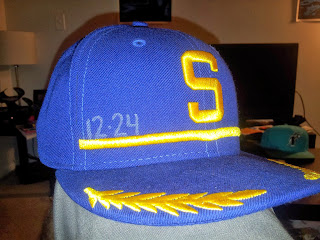
#12- Of all the players to find themselves on the Pilots, Tommy Davis holds the most unfortunate story. See, back in 1956 Davis was singed by the Brooklyn Dodgers, the year after they won their first World Series title in franchise history. Davis bummed around the minors for a bit which included a new team every year as the Dodgers were in the process of relocating to Los Angeles. The move to LA also meant that the team needed minor league facilities closer to Dodgers in case you were wondering what that entailed. On September 22, 1959 Davis made his MLB debut as a pinch hitter. Luckily for Davis he was brought back full-time in 1960 where he would hit .276 with 11 home runs and 44 RBI in 110 games. His effort was good enough to warrant him a fifth place finish for the NL Rookie of the Year. 1961 was a so-so season, but 1962 and 1963 were hands down the best of his career, and no I’m not just saying that.

In 1962 Davis hit .346, the best in the league. He also happened to lead the league in hits (230) and RBI (153), but he only knocked 27 pitches over the wall because some clown named Willie Mays hit 49 that season. But even with his incredible numbers, Davis still only finished third for the NL MVP behind Mays and his teammate Maury Wills who finished the season with a .299 average, six home runs and 48 RBI. Oh! And 104 stolen bases. You might be thinking that Wills also cleaned up in run. He did, with 130; however, that was only 10 more than Davis. Davis should have been the outright MVP that season. The same thing happened the following year when Davis once again won the batting title behind his .326 average, but that year he finished in eighth place for the award. Davis did make the All-Star team both seasons and won his only World Series ring of his career in 1963, but still, he deserved a lot more credit than he got then, AND for the rest of his career.

Davis had a mediocre (by his standards) season in 1964, was hurt in 1965 and picked things back up in 1966. At the end of the 1966 season Davis found himself on 10 different teams in 10 years. Crazy, right!? He was dealt to the New York Mets first for the 1967 season, then to the Chicago White Sox for 1968 only to be thrown into the list of names for the expansion draft where he was selected by the Pilots with the 16th overall pick. 


Davis was a solid choice. His .271 average was the best amongst anyone who played in over 100 games for the Pilots, but he was dealt to the Houston Astros around the trade deadline. Davis played for seven more seasons and ended his career with a .294 average and 2,121 hits having played in an era that especially favored pitchers. Borderline Hall of Famer for sure, but never got beyond one vote as he received 1.8% in 1982.


#24- Born and raised in Holguin, Cuba, Diego Segui holds the unique distinction of having pitched for both of Seattle's major league baseball teams, the Pilots and the Mariners, in the first game ever played by each franchise (earning a save for the Pilots in 1969, and absorbing the opening-day loss for the Mariners in 1977). Segui played for 15 seasons; his time with the Pilots came after his seventh year in the league as a member of the Athletics as he found his name of the expansion draft list. Segui was picked 14th overall. His most productive season came in 1969, for the Pilots, when he posted a career-high in wins, with 12, and 12 saves, against only 6 losses. Segui was also the only pitcher to start at least eight games and finish with a record above .500.  At the end of the season, his teammates voted him the Pilots' Most Valuable Player.

His final season was in 1977 as a member of the Mariners. Segui was the starting pitcher in the Mariners' inaugural game in 1977, earning him the nickname "the Ancient Mariner." Although he set a Mariner record against the Boston Red Sox with 10 strikeouts early in the season, he failed to get a win. After compiling a 0–7 record with a 5.69 ERA, he was released at the end of the season. He continued pitching in the Mexican League for another 10 years, tossing a no-hitter for the Cordoba Coffee Growers in 1978. His son David played in the Majors as well from 1990-2004, playing with seven different teams including the Mariners.


#50- Clearly the most notable name of the bunch, Jim Bouton was a well-known relief pitcher and World Series champion with the New York Yankees in 1962. He was also one of the most consistently used pitchers in the league when he was a starter in his first few years before his arm began to wear down. In 1965, an arm injury slowed his fastball and ended his status as a pitching phenomenon. Relegated mostly to bullpen duty, Bouton began to throw the knuckleball again, in an effort to lengthen his career. By 1968, Bouton was a reliever for the minor league Seattle Angels.

In October 1968, he joined a committee of American sportsmen who traveled to the 1968 Summer Olympics, in Mexico City, to protest the involvement of apartheid South Africa. Around the same time, sportswriter Leonard Shecter, who had befriended Bouton during his time with the Yankees, approached him with the idea of writing and publishing a season-long diary. Bouton, who had taken some notes during the 1968 season after having a similar idea, readily agreed. This was by no means the first baseball diary. Cincinnati Reds pitcher Jim Brosnan had written two such books, about his 1959 and 1961 seasons, called The Long Season and Pennant Race respectively. Those books were much more open than the typical G-rated and ghost-written athletes' "diaries", a literary technique dating at least as far back as Christy Mathewson. Brosnan had also encountered some resistance. Joe Garagiola made a point in his own autobiography, Baseball Is a Funny Game, to criticize Brosnan for writing them.

Bouton chronicled his 1969 season with a frank, insider's look at a professional sports team, eventually naming his book Ball Four. The backdrop for the book was the Pilots' one and only operating season, though Bouton was traded to the Astros late in the season. Unlike previous sports publications, Ball Four named names and described a side of baseball that was previously unseen. Bouton did this by writing about the way a professional baseball team actually interacts; not only the heroic game-winning home runs, but also the petty jealousies (of which Bouton had a special knowledge), the obscene jokes, the drunken tomcatting of the players, and the routine drug use, including by Bouton himself. Upon its publication, baseball commissioner Bowie Kuhn called Ball Four "detrimental to baseball," and tried to force Bouton to sign a statement saying that the book was completely fictional. Bouton, however, refused to deny any of Ball Four‘s revelations. Many of Bouton's teammates never forgave him for publicly airing what he had learned in private about their flaws and foibles. The book made Bouton unpopular with many players, coaches, and officials on other teams as well, as they felt he had betrayed the long-standing rule: "What you see here, what you say here, what you do here, let it stay here." Although his comments on Mickey Mantle's lifestyle and excesses make up only a few pages of the text, it was those very revelations that spawned most of the book's notoriety, and provoked Bouton's eventual blacklisting from baseball. Oddly, what was forgotten in the furor is that Bouton mostly wrote of Mantle in almost reverential tones. One of the book's seminal moments occurs when Bouton describes his first win as a Yankee: when he entered the clubhouse, he found Mantle laying a "red carpet" of towels leading directly to his locker in Bouton's honor.

Bouton retired midway through the 1970 season after the Astros sent him down to the minor leagues. He immediately became a local sports anchor for New York station WABC-TV, as part of Eyewitness News; he later held the same job for WCBS-TV. Bouton also became an actor, playing the part of "Terry Lennox" in Robert Altman's The Long Goodbye (1973), plus the lead role of "Jim Barton" in the 1976 CBS television series Ball Four, which was loosely adapted from the book and was canceled after five episodes. Decades later, Bouton would also have a brief one-line cameo as a pitching coach in the James L. Brooks film How Do You Know. By the mid-1970s, a cult audience saw the book Ball Four as a candid and comic portrayal of the ups and downs of baseball life. Bouton went on the college lecture circuit, delivering humorous talks on his experiences.

Bouton launched his comeback bid with the Portland Mavericks of the Class-A Northwest League in 1975, compiling a 5-1 record. He skipped the 1976 season to work on the TV series, but he returned to the diamond in 1977 when Bill Veeck signed him to a minor league contract with the White Sox. Bouton was winless for a White Sox farm club; a stint in the Mexican League and a return to Portland followed. In 1978, Ted Turner signed Bouton to a contract with the Braves. After a successful season with the Savannah Braves of the AA Southern League, he was called up to join Atlanta's rotation in September, and compiled a 1-3 record in five starts. His winding return to the majors was chronicled in a book by sportswriter Terry Pluto, The Greatest Summer. Bouton also detailed his comeback in a 10th anniversary re-release of his first book, titled Ball Four Plus Ball Five, as well as adding a Ball Six, updating the stories of the players in Ball Four, for the 20th anniversary edition. All were included (in 2000) as Ball Four: The Final Pitch, along with a new coda that detailed the death of his daughter and his reconciliation with the Yankees. After his return to the majors, Bouton continued to pitch at the semi-pro level for a Bergen County, New Jersey team called the Emerson-Westwood Merchants, among other teams in the Metropolitan Baseball League in northern New Jersey, while living in Teaneck, New Jersey.

Once his baseball career ended a second time, Bouton became one of the inventors of "Big League Chew," a shredded bubblegum designed to resemble chewing tobacco and sold in a tobacco-like pouch. He also co-authored Strike Zone (a baseball novel) and edited an anthology about managers, entitled I Managed Good, But Boy Did They Play Bad. His most recent book is Foul Ball (published 2003), a non-fiction account of his unsuccessful attempt to save Wahconah Park, a historic minor league baseball stadium in Pittsfield, Massachusetts.

Although Bouton had never been officially declared persona non grata by the Yankees or any other team as a result of Ball Four’s revelations, he was excluded from most baseball-related functions, including Old-Timers' Games. It was rumored that Mantle himself had told the Yankees that he would never attend an Old-Timers' Game to which Bouton was invited (a charge Mantle subsequently denied, especially during a lengthy answering-machine message to Bouton after Mantle's son Billy had died of cancer in 1994. Mantle was acknowledging a condolence card Bouton had sent). Things changed in June 1998, when Bouton's oldest son Michael wrote an eloquent Father's Day open letter to the Yankees which was published in the New York Times, in which Michael described the agony of his father following the August 1997 death of Michael's sister Laurie at age 31. By juxtaposing the story of Yogi Berra's self-imposed exile with that of his father's de facto banishment, Michael created a scenario where not only were the Yankees placed under public pressure to invite his father back, but the article paved the road to reconciliation between Yankees owner George Steinbrenner and Berra. In July 1998, Bouton, sporting his familiar number 56, received a standing ovation when he took the mound at Yankee Stadium. He has since become a regular fixture at Yankees Old-Timers' Games.

I read Ball Four for the first time around the age of 14 and once again during my time in New York while I was a member of the MLB Fan Cave, but never in between. Both times I felt a sense of duty surging through me. The first time it was after really understanding my gift of writing. Everything I wrote I wanted to mimic the same honest and tone that Bouton displayed during his time with the Yankees and eventually the Pilots and Astros. When I read it again in New York it motivated me to speak from the heart and not hold anything back in my day-to-day experiences, something that inevitably turned around and bit me in the ass on multiple occasions with the powers that be. In any event, I didn’t care. There’s a part of my banishment from the Fan Cave that came as a result of not knowing when I should have kept my mouth shut. While some would ponder of it for the rest of their days, wishing they had done things different, I take the exact opposite approach. I take solace in what I did. The Fan Cave wasn’t just supposed to be about the nine of us that were brought on to watch all the games and interact with the guests, it was about swapping stories and sharing the experience with anyone who is a fan of the game, a reality that no one else past or present seems to understand with the exception of season one Cave Dweller Mike O’Hara. Without Bouton, I doubt I would be the writer, let alone the person that I am today.

Friday, November 8, 2013

August 8- Seattle Mariners


Back on March 4th I tackled the original trident cap that the Seattle Mariners wore from 1977-1980, but I purposely left out one particular detail as it pertains to the cap that I’m writing about today. The 1979 Major League Baseball All-Star Game was the 50th playing of the midsummer classic between the All-Star of the American League and National League and it took place at the four-year-old Kingdome in Seattle, Washington. The game is perhaps most remembered for the play of Dave Parker in the outfield, as he had two assists on putouts at third base and at the plate. With Parker receiving the MVP award for this game, and teammate Willie Stargell winning the NL MVP, NLCS MVP, and World Series MVP, all four possible MVP awards for the season were won by members of the Pittsburgh Pirates. The game was also notable for the play of Lee Mazzilli, the lone representative from the then-lowly New York Mets, providing the 7-6 margin of victory. In his only All Star appearance, Mazzilli tied the game in the eighth inning with a pinch hit home run off of Jim Kern of the Texas Rangers, and then put the NL ahead for good in the ninth, drawing a bases-loaded walk against Ron Guidry of the New York Yankees. This would be the only time the Kingdome would host the All-Star Game. When it returned to Seattle for a second time in 2001, the Mariners had moved to their new home at Safeco Field. The other important detail from this game is that the Mariners inadvertently created one of the most iconic logos in All-Star Game history which they would ultimately don as the primary logo for their caps and uniforms.


Since the All-Star Game was first played in Chicago at Comiskey Field in 1933 it had become customary for the host team to come up with some sort of a cool logo when advertising for the game. You’re probably thinking that my math is off based in the year of the first game played and how the 50th game took place in 1979. Well, from 1959-1961 the All-Star Game was played twice per year, typically one in June and the other in July. In 1961, the final double-dip, the second game, hosted at Fenway Park, ended in a tie. Now where have we seen that happen?


Anyway, the point I’m trying to make is that the logos created are usually only meant for their one-time use at the All-Star Game; however, the Mariners and their fans took quite a liking to the logo they had created for their midsummer classic and decided to make it their official logo for their game caps from 1981 through 1986. With the exception of a few of the teams who incorporated the cap logo into their All-Star Game logos, the Mariners are the only team to do it the other way around.

One of the unfortunate things about this cap is that not a whole lot happened for the Mariners while they wore it with the exception of the players strike which took place in 1981. I don’t know how many times I’ve said it or listed it, but changing uniforms does have a tendency to bring success for a lot of teams, but when it doesn’t, all Hell breaks loose. Besides the strike, this bit of bad fortune befell upon the Mariners: On April 25, 1981, Mariners' manager Maury Wills advised the Kingdome groundskeepers to enlarge the batter's box by a foot. A's manager Billy Martin noticed. Martin showed umpire Bill Kunkel that the batter's box was seven feet long instead of six feet. Martin felt that batters being able to move up a foot in the box could cut at pitches before a curveball broke. Wills was suspended for two games and fined $500. In May, while in Arlington, Texas to play the Texas Rangers, the Mariners' uniforms were stolen. 

On May 28th, this happened...

 
In the sixth inning, Amos Otis of the Kansas City Royals topped a ball down the third-base line. Lenny Randle, the Seattle third baseman, charged the ball, fell on his stomach and appeared to blow the ball into foul territory. Larry McCoy, the home plate umpire, ruled the ball foul, but manager Jim Frey protested. After a discussion, the umpires awarded Otis first base, ruling Randle had illegally altered the course of the ball. Two days later in a game against the Rangers, the Mariners wore their batting practice jerseys, Milwaukee Brewers' caps, and Rangers' batting helmets. The Mariners purchased the Brewers caps at the Rangers' souvenir-stand; the Rangers did not offer Seattle caps for sale.

The only other notable moment came in 1985. On July 9th, in a game between the Toronto Blue Jays and the Mariners at Seattle, Jays catcher Buck Martinez executed a double play by tagging out two runners at home plate. In the third inning, Phil Bradley was on second when Gorman Thomas singled. Bradley was tagged out at home, on a throw from Jesse Barfield to Buck Martinez. There was a collision between Bradley and Martinez; Martinez broke his ankle. Martinez was sitting on the ground in agony and threw the ball to third base in an attempt to tag out Gorman Thomas. The throw went into left field and Thomas ran towards home plate. Toronto left fielder George Bell threw the ball back to Martinez. He was still seated on the ground in pain but was able to tag Gorman Thomas for the second out.

Despite having stars such as Hall of Fame pitcher Gaylord Perry (nicknamed the "Ancient Mariner"), 1984 AL Rookie of the Year Alvin Davis, two-time All-Star and three-time Gold Glove winner Harold Reynolds, three-time American League strikeout leader Mark Langston, and shortstop and team captain Spike Owen on their rosters, the Mariners teams of the entirety of the 1980s were characterized by perennial non-achievement, gaining a reputation for poor performances, low attendance, and losing records. Moreover, the team's ownership again changed hands after the 1988 season, as then-owner George Argyros sold the club to a group headed by communications magnate Jeff Smulyan. However, the 1989 rookie season of center fielder Ken Griffey, Jr., acquired with the first overall pick of the 1987 amateur draft, gave fans hope that a change of fortunes might be on the horizon.

The Mariners since wore the caps for their Turn Back the Clock nights on June 25, 2010 against the Milwaukee Brewers and July 1, 2011 against the San Diego Padres. With all that in mind, it made my markings a bit of a challenge, but I’m pretty happy with my selections and their place in Mariners’ history.


#12- Born and raised in San Diego, California Mark Langston was a second round draft pick by the Mariners out of San Jose State in the 1981 amateur draft. From then until the end of the 1983 season he came up through the ranks of the Mariners’ minor league system, but bypassed AAA altogether when he made is MLB debut on April y, 1984. His most notable season in the minors came in 1982 when he was with the Class-A Bakersfield Mariners and went 12-7 with a 2.54 ERA and 161 strikeouts in 177 1/3 innings.


Langston served as the team’s ace his rookie season, going 17-10 with a 3.04 ERA and a league-leading 202 strikeouts. He ended up finishing in second place for the AL Rookie of the Year Award thanks in part by his jerk of a teammate Alvin Davis who had a great offensive showing. Either way, the important thing to note from the two finishing one-two for the Rookie of the Year Award is that they both beat out Kirby Puckett and Roger Clemens. 1982 proved to be a pretty rough sophomore season for Langston, but he picked his game back up in 1983 when he led the league in strikeouts again with 245. Unfortunately he also led the league in earned runs with 129 as well. Yikes!

In 1987, of course the first year not wearing this cap, Langston had his best year in Seattle, going 19-13 with a 3.84 ERA and once again leading the league in strikeouts with 262. He also made his first All-Star Game appearance and won the first of his back-to-back Gold Gloves. Langston would win seven for his career. But not to sell him short, Langston also finished fifth for the AL Cy Young Award, the highest finish he garner for his career.

Langston went 15-11 with 235 strikeouts in 1988, but got off to a mediocre 4-5 start in 1989 when he found himself on the trading block in July where he was sent to the Montreal Expos along with Mike Campbell for Gene Harris, Brian Holman and Randy Johnson. Langston pitched for 10 more seasons, eight of which came with the California Angels from 1990-1997 when they changed their name to the Anaheim Angels. In 1998 he was a member of the NL pennant-winning San Diego Padres. Noted for his pickoff move to first base, his 91 career pickoffs were, at the time of his retirement, the most in baseball history. Today, he has the fourth-most pickoffs in baseball history, behind only Kenny Rogers, Terry Mulholland and Andy Pettitte, all of them also left-handed pitchers. Currently, Langston serves as a radio color commentator for the Los Angeles Angels of Anaheim during Angels home games. Starting in 2013, Langston does radio color commentary for all games and is also a co-host of the Angels post-game call-in show Angel Talk on radio station KLAA. He also appeared as himself in an episode of “Sabrina, the Teenage Witch.”


#29- Speaking of players most of you have probably never heard of, Phil Bradley is arguably one of the greatest hitters in the history of the Mariners’ organization. Bradley played high school baseball in Macomb, Illinois for the Macomb High Bombers. Due to his success there, the Macomb High School baseball field was later dedicated in his name. Also a talented football player, he played college football at the University of Missouri in Columbia, Missouri and was their starting quarterback from 1978 through 1980. One of the most decorated athletes in Mizzou history, Bradley lettered in football from 1977-81, and in baseball in 1979-81. Bradley quarterbacked the Tigers to three bowl games. He was a three-time Big Eight Conference "Offensive Player of the Year" and set the conference total offense record at 6,459 yards which stood for 10 years. In baseball, he starred as an outfielder on Mizzou teams that won the Big Eight championship in 1980, and went to the NCAA Tournament in 1980 and 1981.


Bradley was selected in the third round of the 1981 amateur draft by the Mariners and made his Major League debut on September 2, 1983, as a pinch hitter against the New York Yankees. Bradley became Seattle's regular left fielder in 1984, batting .301 in 124 games. In 1985 he hit .300 with career-highs in home runs (26) and RBI (880 in 159 games and was selected to the AL All-Star team. He also finished 16th for the AL MVP that season. On April 29, 1986, Bradley was Roger Clemens' 20th and final strikeout as the pitcher set a major league record for strikeouts in a game. In December of 1987, the Mariners traded Bradley and Tim Fortugno to the Philadelphia Phillies in exchange for Mike Jackson, Glenn Wilson, and minor leaguer Dave Brundage.

Bradley hit a respectable .264 in his only season with the Phillies. Almost one year to the day since arriving from the Mariners, the Phillies, desperately in need of pitching help, dealt Bradley to the Baltimore Orioles for Gordon Dillard and Ken Howell. Back in the more familiar AL, Bradley's batting average rose to .277 in his first season in Baltimore. In mid-season 1990, he was traded to the Chicago White Sox for Ron Kittle. His final major league appearance came on September 29, 1990, as he drew two walks and scored a run in a 5-2 White Sox win over the Seattle Mariners. For the Mariners Bradley his .301 lifetime with 52 home runs, 234 RBI and even stole 107 bases.

Wednesday, November 6, 2013

August 6- Boston Red Sox


To get a full understanding of how important this cap and its marking are, I have to flashback 18 years to when I was a sixth grader in Mrs. Costello’s class at Discovery Elementary School in Bakersfield, California. Prior to my 12th birthday in February of 1995 my collection of sports memorabilia was actually pretty pathetic. Outside of collecting baseball cards since 1987, I really didn’t have anything as far as professional team hats or shirts to gallivant around town in. I kept things pretty simple, sporting brands like Stussy and a lot of graphic t-shirts with likes of Bart Simpson or the Teenage Mutant Ninja Turtles affixed to the front. Back then my interest were starting to evolve as well due to the fact that the Major League Baseball season was a bit of a question mark as the labor negotiations were still taking place. Since it was winter, I did what any other kid my age would have done; watch more basketball.

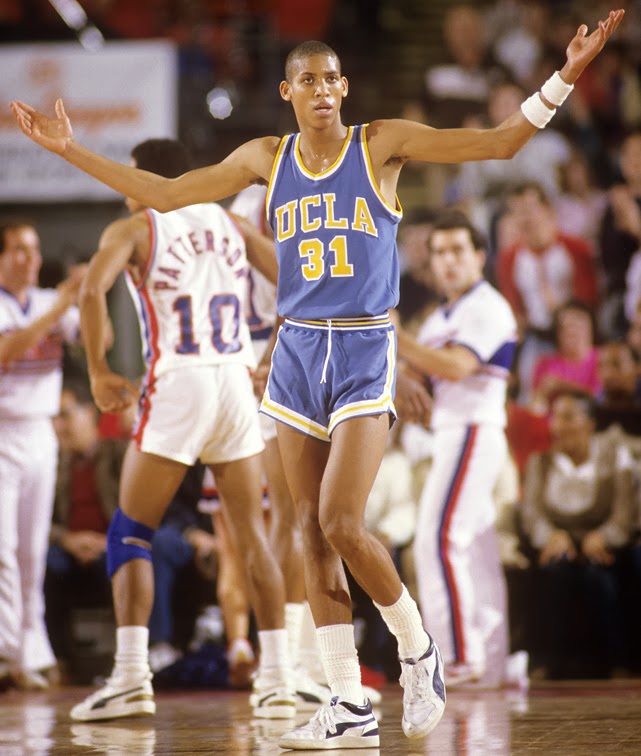
Around the time I started getting into baseball (October 1986) I had begun to develop a bit of a kinship for basketball. Who could blame me? The baseball season had just ended with the New York Mets defeating the Boston Red Sox in the World Series and my tiny little brain was starting to become interested in things other than Sesame Street and Marvel super heroes. But unlike most fans whose love for the game starts at the professional level, mine began in college. More specifically, it started with Reggie Miller and the UCLA Bruins. 


Reggie hadn’t become the trash-talking, heart-breaking, three-point assassin we all know him as today. Back then he was just a scoring machine with the most dominant college basketball program in the history of the NCAA. When it came time for him to move to the next level and enter the NBA Draft in 1987, my allegiance to Reggie continued as the Indiana Pacers drafted him with the 11th overall pick. From then on my time was perfectly divided baseball and basketball started and ended at the opposite ends of one another, thus creating a perfect balance in my sports-loving life. Baseball was still #1 in my eyes, but like I mentioned above, it took a back seat for a bit after the players strike of 1994. With the rest of the season cancelled, including the postseason, my interest went back to the hardwood, and the timing couldn’t have been better. Reggie and the Pacers were having a great year, UCLA was having a great year and on March 18th a press release was sent out by Michael Jordan with only two words attached to it, “I’m back.” Not only was Jordan back, but the competitive fire throughout the National Basketball Association was back, and it just so happened that his first game donning the 345 would take place against my Pacers at Market Square Arena. Jordan scored 19, Reggie scored 28. A little over two weeks later the UCLA Bruins captured their 11th NCAA title, the first without John Wooden at the helm. Even though the MLB season was just about to get underway after a new collective bargaining agreement had been put in place, my mind was too far gone. Basketball had me right where they wanted me. It even teased me in May when Reggie went off for 8 points in 8.9 seconds during a playoff game against the New York Knicks. 

But alas, the Pacers were eventually knocked out of the playoffs and I sought comfort again in the national game. But before I did, I picked up the first of many relics in my sports memorabilia collection, a Grant Hill rookie jersey.


Now, I realize that last sentence makes absolutely no sense to the rest of the story, but I assure you it will. See, one day I was out shopping with my parents at Valley Plaza Mall in Bakersfield and I decided to go browsing on my own, starting with my favorite store in the mall called Jerry’s Dugout. I had about $50 on me at the time and I was definitely in the market for a jersey. Unfortunately for me, they didn’t have any Reggie jerseys so I went with the next best thing, the co-Rookie of the Year from that season. Due to the fact that Champion NBA jerseys back then cost $40 apiece, it took me another three months to finally get the money together to finally add Reggie to my collection… after I picked up Anfernee Hardaway and Jason Kidd first. Oops! But in all fairness to Hill, I had idolized him and Christian Laettner during their days at Duke, so I was more than happy to make him my “first round draft pick of sorts” when it came to my inevitable jersey-buying habit, but what I wasn’t expecting is how that jersey putting me on the right path for the rest of my life.

Three years would pass and my baseball love had been fully restored thanks to some kid from Whittier, California, but I’ll get to that in a moment. My jersey collection had gotten pretty respectable when I entered my sophomore year of high school, the same year in which I had started to realize that my love of writing about sports was overtaking my love of playing them. The varsity basketball coach at my high school wasn’t my biggest supporter despite thee fact that I was clearly one of the better players in the school, but my personal struggles at home between my father and me had spilled over onto the court. As much as I take responsibility for not seeking help to handle my grief, the coach was also responsible for never giving me a chance by labeling me a hot head, rather than actually figure out what the problem was. Without the school team to play on during the winter, I spent a lot of time just watching games, analyzing them and bettering my writing talent as I write for the school newspaper. Mr. Anderson, the teacher in charge on the production of the paper, had begun letting me write my own sports opinion columns which ended up being the first real incarnation of what I’m doing today. I was never hateful in my rants, but I definitely gave perspectives on athletes and their on-court/off-court habits that most 15-year-olds weren’t really expected to touch in a high school newspaper. One article in particular centered around fighting on the playing field/court and the influences the athletes in question have on the kids who watch and idolize them. For a 15-year-old to take on this subject it’s kind of humorous because “what does a kid really know about psychology, let alone what a professional athlete’s opinion on the matter would be?” Rather than staring at a wall to solve this question, I hit the road with my father to Indianapolis as he had gotten tickets for two Pacers games on back-to-back nights against the Detroit Pistons and Charlotte Hornets for my upcoming 16th birthday. While most kids waltzed down to court level to try and get autographs from the players, I asked questions. Based on the time of the pre-game shoot around the Pistons took the court first and very few people were around to get autographs. As Hill wrapped up his session I asked if he would mind giving me three minutes to answer a few questions for thee article I was writing for my school paper. As I write this it all sounds so dumb, but in reality I admire the balls the younger version of me had. Not only did he give my five minutes to talk, he got Laettner to sit down as well and Hill ended up signing that first jersey I ever purchased as it I happened to have it in my backpack. My only regret from that moment was that I didn’t have my Laettner jersey on me, a thought that didn’t click in until my dad and I got back to Bakersfield. After my sit down with those two I headed over to the Pacers’ side and was given the same courtesy my point guard and former-Georgia Tech star Travis Best. I didn’t have any credentials, but that really didn’t seem to matter. All three of them get hounded by the press before and after every game and I highly doubt that very many kids had ever bothered to take on such an adult task. It may not seem like much, but that was the moment when I knew I had a gift. I’m still not sure if it is necessarily a gift for writing, but I most certainly have a talent for getting the interview, no matter how big or how small the story is. This takes me to the summer of 2000…

I was 17-years-old, working two jobs in between my junior and senior year of high school. My main job was that I was in my send year as the bat boy for the advanced-A Bakersfield Blaze, but my other job was as an umpire and scorekeeper for the youth baseball league run by the North of the River Recreation Department. This was the third year in which I held these positions, and they were definitely some of the most fun/rewarding jobs I’ve ever held. Three days a week I worked anywhere between two and three games, alternating my duties with whomever my partner was. On an especially hot day in June I had brought along a new all-baseball shopping magazine that my father had come across. Most of jersey ordering had come via catalog shopping, and since I had moved into collecting New Era caps two years prior, my dad thought I would enjoy it. He was right. In between games and whenever I had free time I coveted that magazine like as if I had boosted my mom’s Victoria’s Secret catalog. I wanted everything, but I was also a realist about what I would continue to wear as I got older. Of all the wares available with a phone call and a credit card the first, and only thing I bought was a home Red Sox jersey. The one thing I should point out with this purchase is that it was the first MLB-related jersey and/or shirt I ever purchased. This is an important detail because I was born and raised an Oakland Athletics fan. To be honest, I did have every Athletics jersey circled, but this jersey popped out. In fact, I still own it and wear it today.


I really don’t have much of a reason as to why I didn’t buy anything else from that magazine. I had the money to do it. I guess I just forgot. The one item I did have queued up and ready to go was the Red Sox cap that’s sitting on top of my head above. It would be 13 more years before I finally found and added this cap to my collection. I guess now is the time to explain why I took you on this journey.

The NBA, more specifically, Reggie Miller had taken the front seat in my love affair with sports, but baseball was certain on the wane. The Athletics were at a low point as then-manager Tony LaRussa had jumped ship along with pitching coach Dave Duncan to the St. Louis Cardinals, my most-hated team. I needed something good to help get me back into the game. That something came in the form of an up-and-coming rookie shortstop in 1996 by the name of Nomar Garciaparra. 

 Glamour shots!!!

Nomar grew up, as I mentioned above, in Whittier, California roughly 130 miles south of Bakersfield. His name first came to my attention in the early 1990s when he was originally drafted by the Milwaukee Brewers in the fifth round of the 1991 amateur draft, but he elected to go to college at Georgia Tech, the same place as future Red Sox teammate Jason Varitek and Travis Best, despite the fact that he had been offered a full-ride scholarship to UCLA as well. Nomar’s star took off immediately. In 1992 he was a member of the USA Olympic Baseball Team in Barcelona, Spain.


He even walked on as a kicker for the football team for a brief period of time in 1993, but 1994 proved to be the biggest year for the Yellow Jackets as they reached the College World Series title game, losing to the University of Oklahoma 13-5. Nomar and Varitek had done almost everything together; they played on the Olympic team together, in the Cape Cod League during the 1993 offseason together and they were both drafted in the first round one pick apart from one another (Nomar at 12th and Varitek at 14th). The only difference was that Varitek had graduated while Nomar left at the end of his junior year as the $895,000 signing bonus offered to him by the Red Sox was too hard to turn down. 


I did what I could to follow Nomar through the ranks of the minor league system, but it was next to impossible without the aid of the internet; funny how times have changed. Nomar took to the professional game like a duck to water, lighting it up on both sides of the ball in two-and-a-half seasons. With September call-ups just around the corner and Nomar hitting .343 with the AAA Pawtucket Red Sox, he was brought up a few days early and made his debut on August 31st as the Red Sox were in the midst of a battle for the American league Wild Card spot. As fate would have it Nomar’s first game came against my Athletics in which he went 0-1 as a pinch hitter for then-second baseman Jeff Frye. But the next day Nomar was penciled in as the starting shortstop which turned out to be a controversial move for then-manager Kevin Kennedy as John Valentin had been serving as the team’s full-time shortstop since 1992 and especially after his top-10 finish in the AL MVP vote the previous season. Nonetheless, Kennedy gave Nomar the field and made Valentin the designated hitter. Valentin went 1-5 with a RBI triple in the three spot while Nomar went 3-5 with a solo home run, two runs and scored and two RBI. It wasn’t long before the Fenway Faithful took a shine to the kid with the funny name.

Due to the fact that my mother has been a life-long Red Sox fan I found my affinity for Nomar to be an easy transition. Everything about the way he moved on the field, adjusted his batting gloves in between pitches and the way he conducted himself in public and with the media personified everything that was good and just about the game. Anytime the Red Sox games were broadcasted, I watched. Anytime they played the Athletics I did my best to make it up north for a game or two in the series. Every so often a special player comes into the league who makes it next to impossible to not root for, even New York Yankees fans have to admit this. He is the sole reason why I made that Red Sox jersey my first purchase. He is the reason why I searched so hard for this cap.


Unless you were a fan of the Red Sox in 1999 or an avid cap collector like myself, you probably don’t remember seeing these on the field. This was one of two alternate caps worn that season, the other having all-white panels, a navy blue bill and a red “B” logo. 


Not only is it incredibly hard to find one for sale, it’s twice as hard to find any history about it. Based on what I’ve been able to uncover the few Web sites and dealers who are selling this cap have it labeled as either the “1999 alternate” or the “1999-2000 alt” as shown by the sticker still affixed to the cap.


What I’ve been able to find is that the Red Sox only used it for a handful of games, but not in 1999. This bit I found courtesy of Uni-Watch; however, according to the write-up by Paul Lukas in 2007, the Red Sox never wore it again after 1997. So why does everyone believe it was used in 1999 and 2000? Well, back in 1999 New Era introduced the mesh batting practice caps. The first edition was used in 1999 and 2000 and featured the same color combination as the 1997 alternate cap.


What I find truly astonishing and coincidental is that Nomar’s three best years came in 1997, 1999 and 2000.

In 1997, Nomar’s first full season, he played in 153 games and took the Rookie of the Year honors, made his first All-Star Game appearance, won his first Silver Slugger Award and finished eighth for the AL MVP by hitting .306 with league-highs in hits (209) and triples (11) as well as 30 home runs, 98 RBI and 22 stolen bases. In 1999 and 2000 he made the All-Star team, but more importantly he won back-to-back batting titles, going .357 and .372 respectively. He also finished in the top-10 for the AL MVP in those seasons as well. Nomar played nine amazing seasons in Boston. He hit .323 with 178 home runs and 690 RBI, but sadly never won a Gold Glove thanks to Omar Vizquel (1993-2001), Alex Rodriguez (2002-2003) and some clown named Derek Jeter (2004-2006). On July 31, 2004 Nomar was traded to the Chicago Cubs as part of a four-team deal which brought Orlando Cabrera and Doug Mientkiewicz to Boston. When the deal was made every joyous feeling I ever had for the Red Sox was turned to anger. Nomar was the face of the franchise, the guy whose name was shouted by Jimmy Fallon every weekend on Saturday Night Live (NO-MAH!!!). Even though he had taken the field for the Sox that season, Nomar was not on the field when it counted, hoisting the Commissioner’s Trophy at the end of the World Series. I was happy that Nomar got a ring the following season, but everything about the rest of his career felt out of place.

From 2005-2009 Nomar battled with injuries, but made his sixth, and final All-Star Game appearance in 2006 as well as a 13th place finished for the National League MVP in his first of three years with the Los Angeles Dodgers. In 2009 he signed a contract for one season with my Athletics and I was fortunate enough to catch him in two games at the Coliseum, both of which happened to come in early April against the Red Sox. Nomar was granted free agency at the end of the season He signed a one-day contract in 2010 with the Red Sox, only to be able to officially retire as a member of the Red Sox.


While I identify completely with all the players who have ever donned the green and gold for the Athletics, I have, and will always have a spot in my heart for Nomar. Even though I played second base for all of my life, I played it with the same intensity and guile as the man who wore #5 for the Sox. I certainly wasn’t as fidgety at the plate, but I still swung the bat as if I was catching a glimpse of the Green Monster out of the corner of my left eye. Despite the fact that I never played ball beyond high school, one of my dreams was to one day shake hands and meet the man who restored my love in baseball. On May 8, 2012, my dream came true.

I was a little over a month into my time at the MLB Fan Cave when we got the word that a few of the members of the Baseball Tonight crew were going to be stopping by. It was already a jam packed day as David Price, Sean Rodriguez and James Shields from the Tampa Bay Rays were slated to stop by in the morning, but I’ll get to that story in another post. What I wasn’t expecting in between meeting both crews was that I was going to be taken down to the basement to be interrogated for an incident that had broken out between Cardinals’ representative Kyle Thompson and me from a few days before. It was by far one of the most humiliating experiences of my life as I was put into a corner by the executives despite the fact that our issue had already been resolved internally. For some reason “someone” had decided to rat me out for that and a bevy of other things that weren’t true. Nonetheless, when I went back upstairs to meet our guests I wasn’t exactly in the right state of mind. All I could think about was that I was going to be asked to pack up my things and go home. That moment wouldn’t come for a few more weeks. I did what I could to prepare myself. I had packed my Nomar player-T that I’ve had since I was 18-years-old and my home Athletics cap as Pedro Gomez, Mark Mulder and Nomar were the three that were stopping by. As they walked up to the front door I froze. My stomach started churning and I did whatever I could to keep from breaking down. This moment was way too important for me to let my emotions get the better of me.

The other eight Cave Dwellers and a few of the executives were the first to greet them. I hung back for a little bit, waiting to find the perfect time to step in and transition my emotion into something more positive. It took  a little bit, but Mulder and Nomar spotted me in front of the Cave Monster (the 15 TV display) and struck up a conversation based on the shirt and hat combination I was wearing. Nomar was pretty stoked that I was rocking his shirt, but Mulder was a little confused about why I was wearing an Athletics cap with it. I explained to him that I was first, and foremost an Athletics fan and that I wore because of the years that he spent with the team. I also made sure to mention that Nomar spent 2009 with the club without trying to sound like a jerk. He chuckled and then the two asked me about what it’s like being a Cave Dweller. I don’t remember the exact wording my Mulder, but somehow the topic of tattoos was brought up. It was intended to be a joke, like in the sense that he said, “Well at least you don’t have any tattoos” for my team. I turned my head to Nomar and then back and said, “I actually do have an A’s tattoo.” He responded, “Really?” I then looked back at Nomar and said, “I actually have a Red Sox tattoo as well.” “Yeah right,” joked Nomar. I then came back with, “No seriously, I honestly have every MLB team tattooed on my body.” Mulder and Nomar looked at one another, both with “yeah right” expressions on their face before Mulder said, “You have to prove this.” As I was propping my shirt up to show off the AL side one of the public relations executives, Jeff Heckelman, grabbed Gomez and said, “Pedro, you have to see this.” And then this happened…


There’s a reason why the expression ‘”a picture says a thousand words” exists, and this is one of those photos that brings me the most joy from my time in New York. All the troubles from before their arrival vanished, and I was finally myself again. One thing I did take away from this photo is that I had let myself go health-wise and cut out a lot of the junk food I had been chowing down on during my days of sitting around and watching baseball for 12-14 hours a day. I was stoked that all three were cool about the ink work, as that is something that also makes me a little bit nervous before I show it off to anyone who actually has a job in baseball.

The rest of the time they were there they spent answering a few questions for the Facebook page, shooting a few segments for that night’s show and Nomar even gave Yankees fan Eddie Mata a few pointers on how to accurately capture his approach to the plate. It was during this time that one of the members of the Fan Cave production crew, a Red Sox fan named Brad, came up to me and asked me how I was handling all of this. By “all of this” he meant the visit by Nomar. At the time I didn’t realize how loud I was talking, but one of the producers from Baseball Tonight overheard what I said, “This is unreal. Nomar is one of the top-three guys within baseball I have ever wanted to meet. It’s a crazy dream that has come true.” Unfortunately I don’t remember the name of the producer from Baseball Tonight, but he pulled me aside and asked if he could interview me for the show. Naturally, I was all about it. Here’s the interview.

Not too long after we wrapped up it was time for them to go. I made sure to stop and thank each person for their time, not really expecting to run into any of them ever again, unless I somehow got a job with ESPN. As it turned out, I ran into Gomez two more times before the end of the season during my cross-country baseball road trip. As for Mulder and Nomar, I wished them both best, but for Nomar I put a little bit more emphasis on how much of an honor it was to meet him. Like my moment in the seats of Market Square Arena with Hill and Laettner, the few moments I was able to spend talking baseball with Nomar was a crowning achievement in my journey to break in as a professional sports writer. No matter what meets me on my path of success, I can always check that one off of my list.


.357/.372- When it came to marking this cap up I couldn’t think anything more fitting than the two averages that Nomar posted in 1999 and 2000 when he won his batting crowns. Had I not spent so much time on the build up to the conclusion I probably would have given love to Pedro Martinez for his back-to-back AL Cy Young Award wins in the same years, but those are the breaks. Perhaps if I’m able to track down the actual mesh batting practice cap I’ll be able to out it together. Until then, it’s on to the next post.